Introduction
Communication remains at the heart of every successful business. Companies depend on phone systems to communicate with customers, sales teams, suppliers, partners, and employees every day.
For decades, traditional telephone systems were the standard choice for business communication. However, the rapid adoption of cloud technology and high-speed internet has changed the way organizations make and manage calls.
Today, businesses can choose from modern VoIP business phone systems, cloud telephony platforms, and advanced communication solutions that offer capabilities far beyond traditional telephone infrastructure.
But does that mean traditional phone systems are no longer relevant?
Not necessarily.
The right solution depends on the size of your organization, communication requirements, existing infrastructure, budget, remote-work strategy, and future growth plans.
In this guide, we’ll compare VoIP and traditional phone systems and explain the key factors businesses should consider before choosing their communication infrastructure.

What Is VoIP?
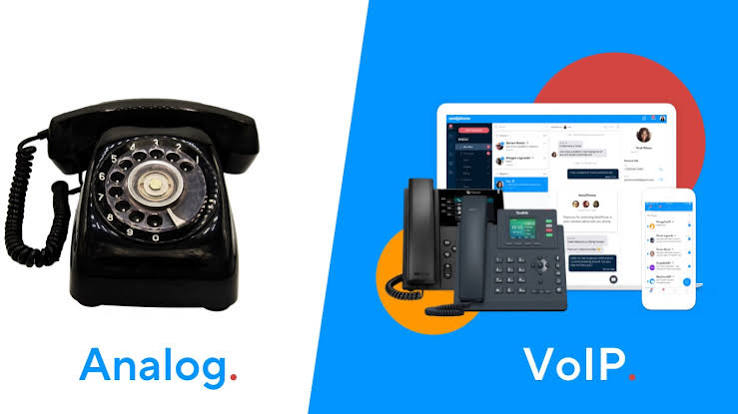
Voice over Internet Protocol (VoIP) is a technology that allows voice calls to be transmitted over an internet connection rather than traditional telephone networks.
Instead of sending voice through conventional telephone infrastructure, VoIP converts audio into digital data and transfers it through an IP network.
This makes it possible to integrate voice communication with modern business technologies such as:
- CRM platforms
- Cloud applications
- Call center software
- Mobile devices
- Computers
- Messaging platforms
- Business automation systems
What Is a Traditional Phone System?
Traditional business phone systems rely on conventional telephone infrastructure.
Depending on the system, businesses may use physical telephone lines, PBX hardware, extensions, and on-premises equipment.
Traditional systems can be reliable, but they often require dedicated hardware and technical maintenance.
Adding new users, changing configurations, or expanding to another location may also require additional infrastructure.
VoIP vs Traditional Phone Systems
The biggest difference is how calls are transmitted.
| Feature | VoIP | Traditional Phone System |
|---|---|---|
| Call Technology | Internet-based | Traditional telephone network |
| Hardware Requirements | Usually lower | Often higher |
| Scalability | Highly scalable | More infrastructure required |
| Remote Work | Excellent | Often limited |
| CRM Integration | Strong | More limited |
| Software Integration | Extensive | Limited |
| Maintenance | Often cloud-managed | Hardware-focused |
| Advanced Analytics | Common | Depends on system |
| Geographic Flexibility | High | Lower |
| Unified Communication | Supported | Limited |
1. Cost and Infrastructure
One of the biggest reasons businesses consider VoIP is the potential to reduce communication infrastructure costs.
Traditional systems may require:
- PBX hardware
- Physical telephone lines
- On-site maintenance
- Specialized equipment
- Hardware upgrades
VoIP systems can reduce the amount of dedicated infrastructure required because calls use an existing internet connection.
However, businesses should evaluate the total cost of ownership rather than comparing only monthly calling prices.
Factors such as internet connectivity, devices, licensing, support, security, and implementation should all be considered.
2. Scalability
Business requirements change.
A company may start with ten employees and eventually grow to hundreds of users across several locations.
Traditional phone systems can become more complicated to scale because additional hardware or lines may be required.
VoIP platforms are generally easier to scale.
Businesses can often:
- Add users
- Remove users
- Create extensions
- Configure departments
- Add locations
- Adjust calling features
without redesigning the entire communication infrastructure.
3. Remote Work
Remote and hybrid work have changed business communication.
Employees may work from:
- Home
- Branch offices
- Coworking spaces
- Different cities
- Different countries
VoIP is well suited to this environment because users can access business communication services through supported internet-connected devices and applications.
This allows organizations to maintain communication workflows even when employees are not physically located in the same office.
4. CRM Integration
Modern businesses increasingly depend on CRM platforms to manage customer relationships.
VoIP systems can integrate with CRM platforms to support features such as:
- Click-to-call
- Automatic call logging
- Customer screen pop-ups
- Call history
- Contact synchronization
- Follow-up workflows
This integration helps sales and support teams access relevant customer information during conversations.
5. Advanced Call Management
Traditional phone systems can provide basic call management features, but modern VoIP platforms can offer much more.
Depending on the solution, businesses may have access to:
- Call forwarding
- IVR
- Call queues
- Automatic call distribution
- Call recording
- Call routing
- Voicemail
- Call analytics
- Agent monitoring
These capabilities are especially valuable for customer service and contact center operations.
6. Better Support for Call Centers
Call centers have more demanding communication requirements than ordinary offices.
Agents may handle hundreds or thousands of interactions every day.
VoIP-based call center solutions can support:
- Cloud dialers
- Predictive dialing
- Automatic call distribution
- Call recording
- Agent monitoring
- Real-time dashboards
- Campaign management
- CRM integration
This creates a communication environment designed around high-volume customer interactions.
7. Business Continuity
Communication failures can have serious consequences.
If a traditional system depends heavily on physical infrastructure at one location, an outage or equipment failure can disrupt operations.
Cloud-based VoIP solutions can provide additional flexibility through distributed infrastructure and remote access, although businesses should still maintain reliable internet connectivity and appropriate backup systems.
8. Analytics and Reporting
Modern businesses need measurable performance data.
VoIP and cloud communication platforms can provide detailed information about communication activity, including:
- Number of calls
- Call duration
- Answer rates
- Missed calls
- Agent performance
- Queue activity
- Call outcomes
Managers can use these insights to identify bottlenecks and improve customer service.
Is VoIP Always Better?
Not necessarily.
Traditional phone systems may still be appropriate for businesses that:
- Already have significant existing infrastructure
- Operate in environments with limited internet availability
- Have specialized legacy requirements
- Have communication systems that are expensive or difficult to replace immediately
The decision should be based on business requirements rather than simply following a technology trend.
When Should a Business Consider VoIP?
VoIP may be a strong option if your organization:
- Has multiple locations
- Supports remote employees
- Operates a call center
- Uses CRM software
- Needs scalable communication
- Wants advanced call analytics
- Requires cloud-based tools
- Plans to expand internationally
It can also be valuable for organizations looking to consolidate multiple communication technologies into a more integrated platform.Gallery
What Internet Connection Does VoIP Need?
VoIP depends on network quality.
Businesses should pay attention to:
- Bandwidth
- Latency
- Jitter
- Packet loss
- Network stability
- Redundancy
A fast connection alone does not guarantee excellent call quality.
For high-volume contact centers, dedicated business connectivity such as an Internet Lease Line can provide a more predictable network environment for voice and cloud applications.Home
How TAM INFOSOFT Helps Businesses Modernize Communication
Modernizing business communication requires more than replacing a telephone system.
Businesses need technologies that connect voice communication with customer data, automation, analytics, and business workflows.
TAM INFOSOFT provides communication solutions designed to help organizations modernize their operations through technologies such as:
- Cloud Dialer Software
- Call Center Solutions
- VoIP Communication
- CRM Integration
- Cloud Telephony
- Business Communication Platforms
By combining these technologies, organizations can create communication enviroGallerynments that are more scalable, connected, and efficient.
How to Choose the Right Business Phone System
Before choosing a solution, evaluate:
Business Size
How many users and locations need communication services?
Call Volume
Does your business handle a small number of calls or thousands of interactions every day?
Remote Work
Do employees need to work from multiple locations?
CRM Requirements
Does the phone system need to integrate with your existing CRM?
Scalability
Will your communication requirements grow significantly in the next few years?
Reliability
What level of uptime and network redundancy does your business require?
Security
How will calls, customer data, accounts, and access permissions be protected?
Support
What level of technical support will your organization require?
Frequently Asked Questions
Is VoIP better than a traditional phone system?
For many modern businesses, VoIP provides greater flexibility, scalability, integration, and advanced functionality. However, the best choice depends on the organization’s specific requirements.
Does VoIP require internet?
Yes. VoIP relies on an internet or IP network connection to transmit voice communication.
Can VoIP work with CRM software?
Yes. Many business VoIP platforms can integrate with CRM systems to automate call logging, customer identification, and communication workflows.
Is VoIP suitable for call centers?
Yes. VoIP is widely suited to call center environments because it can support cloud dialers, call routing, analytics, recording, monitoring, and CRM integration.
Can VoIP support remote employees?
Yes. Cloud-based VoIP solutions can enable employees to access business communication tools from different locations, provided the required connectivity and security controls are available.
Does VoIP reduce business communication costs?
It can reduce certain infrastructure and calling costs, but businesses should evaluate the complete cost of deployment, connectivity, software, devices, support, and maintenance.
Conclusion
The traditional business phone system is no longer the only option for organizations that need reliable professional communication.
VoIP provides a modern alternative that can connect voice communication with cloud applications, CRM platforms, call center software, analytics, and remote-work environments.
For growing businesses, the ability to scale communication, integrate customer data, and manage calls from virtually anywhere can provide a significant operational advantage.
However, technology should always follow business requirements. Organizations should evaluate their network infrastructure, call volume, workforce, security requirements, budget, and future growth before selecting a communication system.
For businesses ready to modernize their communication infrastructure, TAM INFOSOFT’s VoIP, Cloud Dialer, Call Center, and integrated communication solutions can provide a scalable foundation for more efficient customer and business communication.Blogs